.jpg)


A driving sound of a 1950s-style rockabilly band spills from the Handlebar. The music rolls out to the blocked-off street and mixes with the growl of rat rod engines. Children run between scrap-metal bumpers as men and women lean over open hoods, talking shop and admiring the weld lines of the vintage cars lined up for public viewing. Spring’s blossoming ligustrum hangs in the air among the gasoline, grease, and grit.
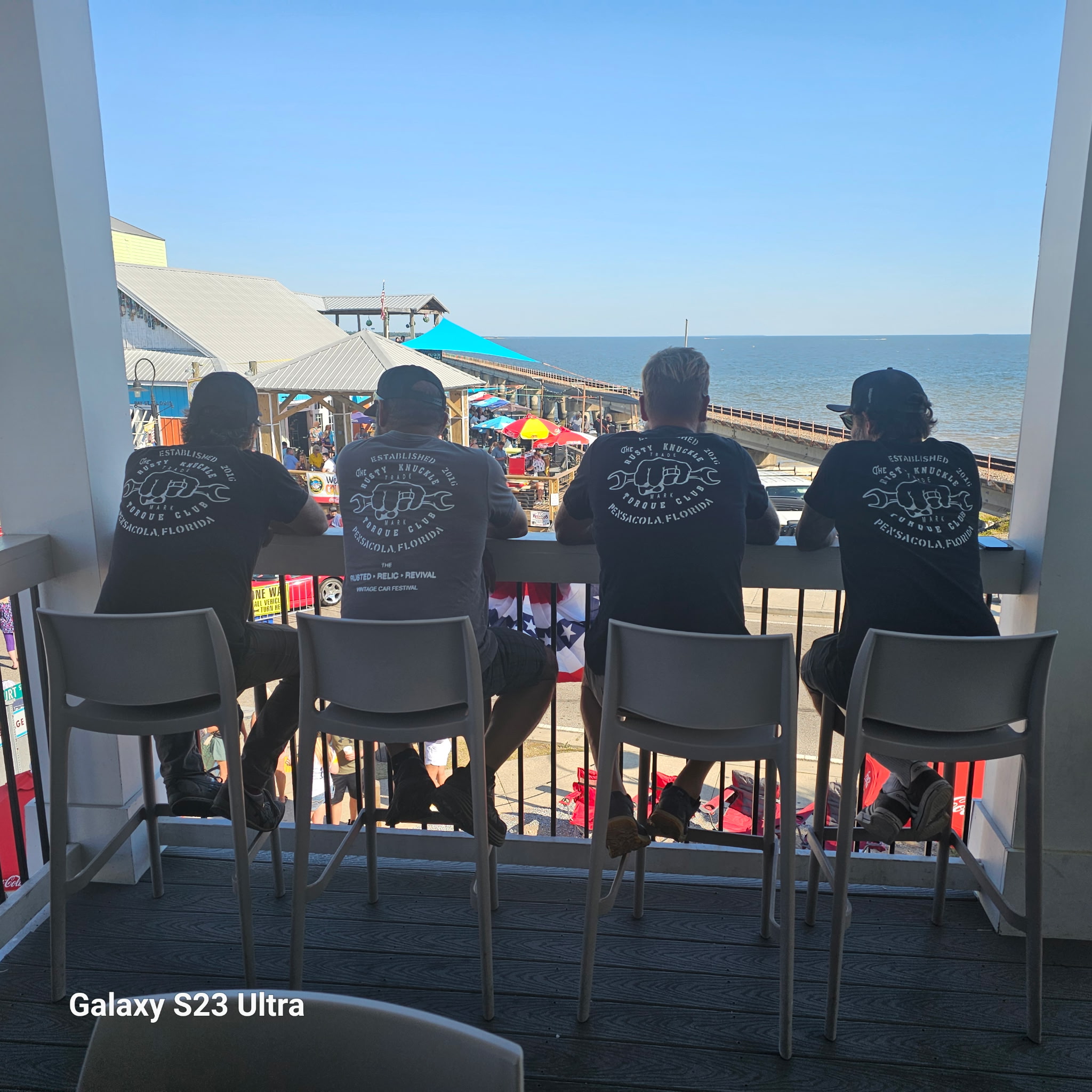
To an outsider, it could look like the beginnings of a bar brawl or a gospel revival of gearheads. Pinup girls pose for photos next to the patina works of art, which, for the uninitiated, may seem out of place in a car show. But to the Rusty Knuckle Torque Club, this is a nostalgic return to the post-WWII working-class culture of style over polish, rebellion over mainstream perfection. Or as Scott Bollinger, founding member of Rusty Knuckle, calls them, “Cars with scars.”
About a decade ago, Scott Bollinger, Tim Smith, and Ben Bogan turned their shared obsession with building cars into something official. At the time, few shows welcomed patina builds and rat rods. Most favored polished chrome and showroom shine. Bollinger wanted something different, a group that didn’t discriminate between builders and bridged the gaps between clubs.
For Bollinger, the appeal of patina lies in rescuing vehicles “destined for the scrap yard” or resurrecting a field find or barn relic back to life. It’s a working-class ethic to get it running with what you’ve got. Built, not bought. The Rusty Knuckle Torque Club nods to the “hands-on guys,” the ones who like getting dirty and busting knuckles in the process. It’s a kinship rooted in hard work and ingenuity, not in pretty cars.
Bollinger joined the Navy at 18. Not long after, he bought a 1968 Mustang for $1,500, his first project. He spent his off-hours in the Morale, Welfare, and Recreation auto-hobby shop on base in Philadelphia, learning by doing. Once he got the Mustang running, he took it to the streets of South Philly. Assuming the statute of limitations has expired, he admits he spent more than a few nights drag racing.

“The early ’80s were a different time,” he said when asked about police presence and the possibility of getting in trouble with the Navy.
He no longer has that Mustang and often regrets getting rid of it. It would be worth about $30k now, he said. Instead, many years ago, he sold it to an ex-girlfriend's brother, who ran it into a light pole two weeks later. The brother survived, but the car did not.
Shortly after forming, the Rusty Knuckle Torque Club held its first car show at the late, great friend Mike Evers’s Vintage Texaco Station on Creighton Road in Pensacola. Twenty vehicles showed up. It was less of an organized event and more like a friend lifted the garage door and let the public take a look. After Evers’s tragic death in 2022, the club carried on and found other places to host events. What began as a small group has grown into twice-a-year shows that draw hundreds of vehicles, a seven-member board, and more than 1,200 followers online, proof that a culture built on authenticity has lasting power.

In August, the club will be part of Downtown Pensacola’s Gallery Night. But the April 18th show at the Handlebar, known as “The Rusted Relic Revival,” belongs to the full experience. Besides the car show, The Modern Eldorados will perform rockabilly standards, and there will be a Pinup Girl Contest, a nod to the era that shaped the culture. It won’t feel like a staged event, but like stepping back in time when cars had character, music had heart, and nobody minded a little grease.
The history of pinup girls and car culture dates back to WWII, when Betty Grable appeared painted on aircraft noses to boost morale or humanize the war machines. However, modern pinup girls may have sprung from the more rebellious Bettie Page, who, while famous as a Grable contemporary, was more of a cult personality than the wholesome Grable. Page fell into obscurity before a rediscovery in the 1980s by cartoonist Dave Stevens. The question of “classy, sassy, or trashy” showing the juxtaposition between Grable and Page could easily be asked when comparing polished hotrods against ratrods. \
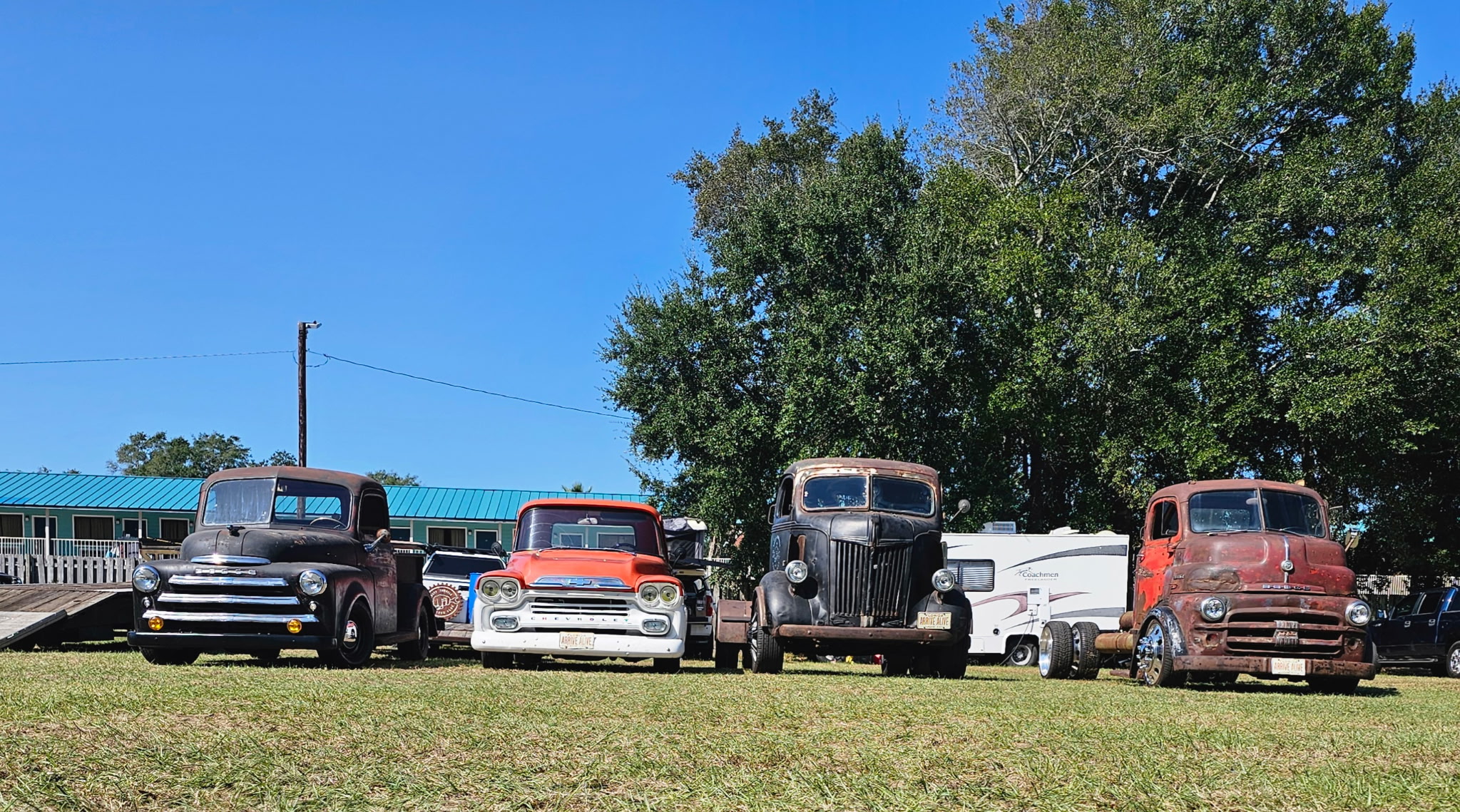
One car to look for at the April 18th “The Rusted Relic Revival” is Bollinger’s 1940 Ford COE (Cab Over Engine) truck. A unique beast built for work in 1938. The flat face served two purposes: emerging cities had narrower streets, so a tighter turn radius was necessary, and there was the Motor Carrier Act of 1935, which had a length limit, so putting the cab over the engine provided maximum capacity for cargo.
Bollinger found one for sale in Salt Lake City and flew out from Pensacola to purchase it and drive it home. Bollinger took a risk, but after consulting with the owner, he trusted he could get it home. It was January, and the route back to Florida took him through the cold Colorado winter. So cold that he purchased two burritos at a roadside stand and placed one under his seat to eat later. When he went to eat it, it was frozen. But he made it home in six days. Bollinger said he could’ve probably made it in three days, but every time he stopped, people wanted to talk about it or take photos with it, significantly slowing him down. But the stories are part of what culture is about.
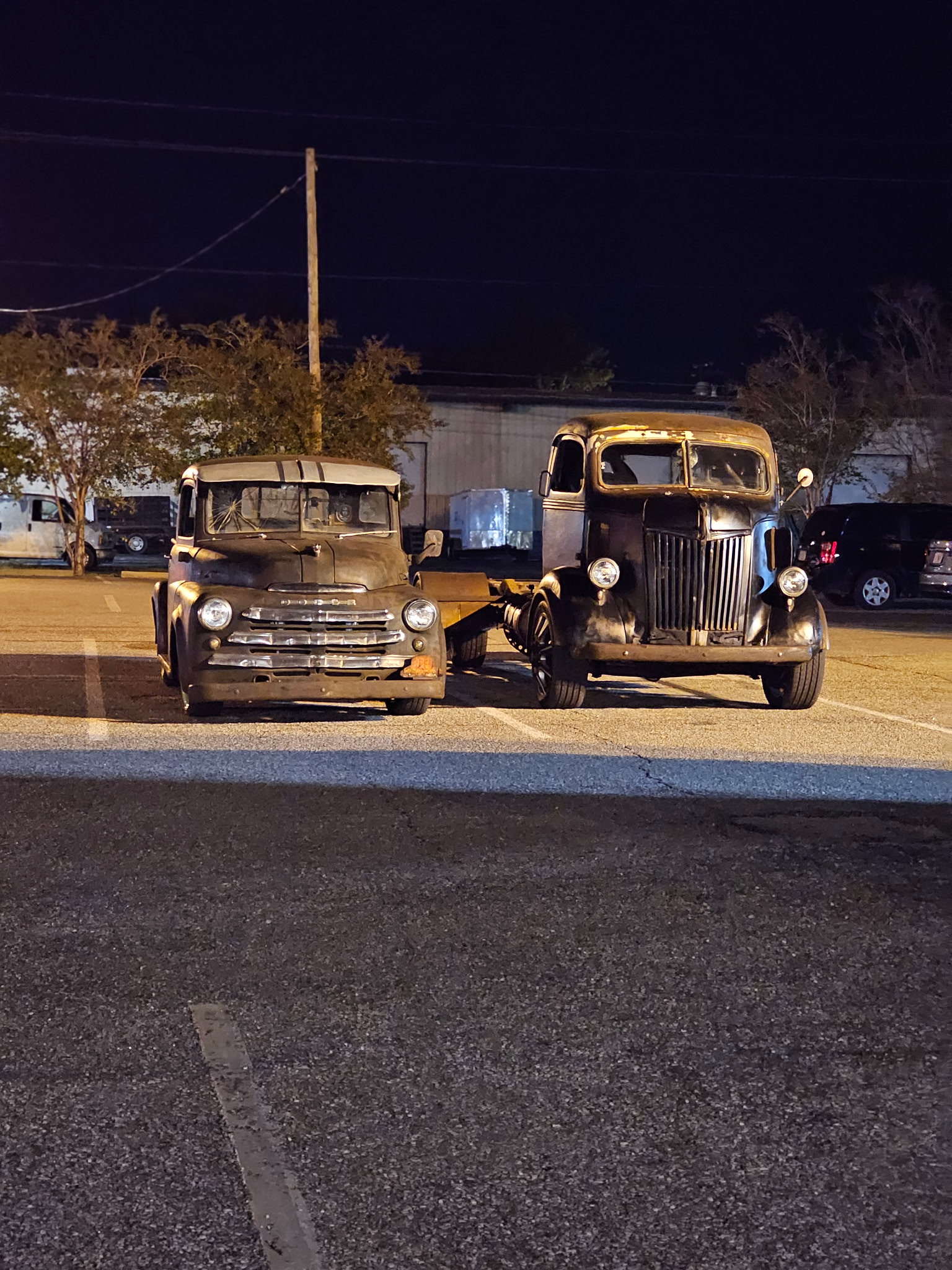
Bollinger’s 1940 Ford COE is a true rat rod. The gas tanks are built out of beer kegs, and the frame is a 1985 Ford motorhome E350. In fact, the frame was originally too long for the body, and Rusty Knuckle board member and welder extraordinaire (owner of Fluid Metalworks), Brandon Godwin, helped Bollinger cut four feet from the frame and then weld the shorter frame back together.
At the April 18th Rust Relic Revival Show, Bollinger’s 1940 Ford COE will be on display, as will Godwin’s two trucks, a 1949 and a 1951 Dodge.
What: Rusty Relic Revival Car Show featuring a performance by The Modern Eldorados and a Pinup Girl Contest
Where: The Handlebar, 319 N Tarragona Street, Pensacola, FL
When: April 18th, 2026 at High Noon
More from
Events That Inspire
category


Top Five Things to Do in September

Top Five Things to Do in August
Top Five Things to Do in July