.jpg)


What is it about a college campus that impacts our communities? This is not a political opinion, but a firsthand observation from my perspective as the director of development of the Culverhouse College of Commerce at the University of Alabama many years ago.
As a non-academic, I was recruited for the position as the publicly funded university prepared to launch its first-ever capital campaign. I was a fresh face with no preconceived viewpoint except that I was a graduate many years prior. After spending 13 years with alumni, faculty, staff, and administration, I gained firsthand insight into why institutions of higher learning add value to all of our lives.
Over the course of my time there, I watched and participated in all manner of experiences that take place on a college campus. My takeaway was engagement. Engagement across all levels, both on and off campus, was changing lives and making a positive difference.
My job was to identify people with the means to make a significant financial contribution and then engage them to consider a significant gift in support of the university. I needed to understand the myriad reasons why someone would pledge, and be able to present the school's Case for Support to a variety of potential donors. It was a personalized endeavor to match people to needs.
Because this was the first capital campaign undertaken by this public institution, the first step was to educate the public on why we needed to raise funds in the first place. We were a public institution, funded by the taxpayers. Why did we need private funding?
The short answer was that state funding budgets were shrinking every year, and if we were to be anything but mediocre, we needed private support. That's not hard to comprehend. Mediocre is not something to get excited about. Everyone would prefer to be part of a winning team, right?
Interestingly, when we first launched the capital campaign, each college on campus had gone through a process of evaluating the needs that would raise their school's reputation among peer institutions. This "wish list" was like a kid at Christmas, hoping Santa would see them as the best kid in the world all year long and grant every request.
Then reality sets in. Questions were asked: "What are our core strengths? What will give us a competitive advantage? What will boost our regional and national reputation, add value to our graduates' degrees, and attract recruiters from the best companies to hire our students?" That's where the rubber meets the road.
The other question was whose responsibility it is to engage donors, build relationships, and make the ask. This fundraising idea was a new phenomenon, and, at first, seemed to be the responsibility of the Office of Advancement alone.
Then something interesting happened. Faculty and staff began to see the benefits of new resources that supported student scholarships, internships, program support, and even endowed professorships and chairs, enabling the school to recruit the best and brightest among its ranks. The benefit was real. It was making a difference in the quality of education and opportunity, benefiting everyone. Before long, everyone throughout the school began to understand they had a role, and it was about engagement, understanding, and building relationships.
As Director of Development, I witnessed this transformation. Empirical numbers regarding the quality of incoming students began to rise. More professors considered and wanted to teach at our business school. We became more competitive in recruiting and retaining top-tier talent. More and more companies looked to us to engage our students. More programs were created and supported by companies and individuals because the research and education being conducted was exactly what they were looking for. It made everyone better and more competitive.
Institutions of higher learning are where ideas become reality. The art of seeing something that might be a solution to a problem, conducting research among faculty and students to prove a concept, and developing a prototype with economic potential is what a college campus is really about.
This cannot be overstated. These incubators, if you will, have tremendous potential in the real world. College campuses throughout the world bring the best and brightest minds together to engage in thought, discussion, learning, trial and error, until something with real potential is born. It's an amazing process to see take place. And how cool is it that people, young and old, get to participate in this kind of creative process? It makes the world a much, much better place.
Engagement on a college campus takes many shapes and forms. I've witnessed new centers of excellence, born out of necessity to help save a business from closure, at an international automobile manufacturer because two administrators pleaded to allow a group of faculty and graduate students to go in and see what they could do to save the company. The result was hundreds of jobs saved and a more efficient business model, keeping the business open and viable for almost two more decades. That was a successful engagement.
I also witnessed brand new programs emerge from nothing as the world transformed from "the electronic super highway" (remember that?) to Management Information Systems. It rose to become the fourth-ranked program in the nation, as noted by U.S. News & World Report. What was their secret? Dedicated faculty who engaged the Chief Information Officers (CIOs) from some of the nation's largest companies like Procter & Gamble, Walmart, Accenture, and others to come to campus twice a year to interact with students and faculty.
Department heads asked these CIOs a simple question: What can we do to best prepare our students to hit the ground running after they graduate? Guess what? Many of the students these CIOs engaged with were hired by these companies and became top employees and leaders. Faculty and students excelled because they were well prepared to deliver on what these companies needed. Funny how that kind of engagement pays dividends for all involved.
I'm a big fan of Internships. Businesses get the benefit of working with bright young minds, and the intern gets to "kick the tires" so to speak, on a potential employer after graduation. It's a win-win. What if you discover that particular career path isn't your cup of tea? Better to find that out now rather than later, right?
My stepson graduated from UWF in Environmental Science, worked for an environmental company as a student, taking water samples in Pensacola Bay for testing, and was offered a good position doing what he loves after he graduated. He's still with the same company today; he's happy, appreciated by his employer, and making a difference. It all started with engagement.
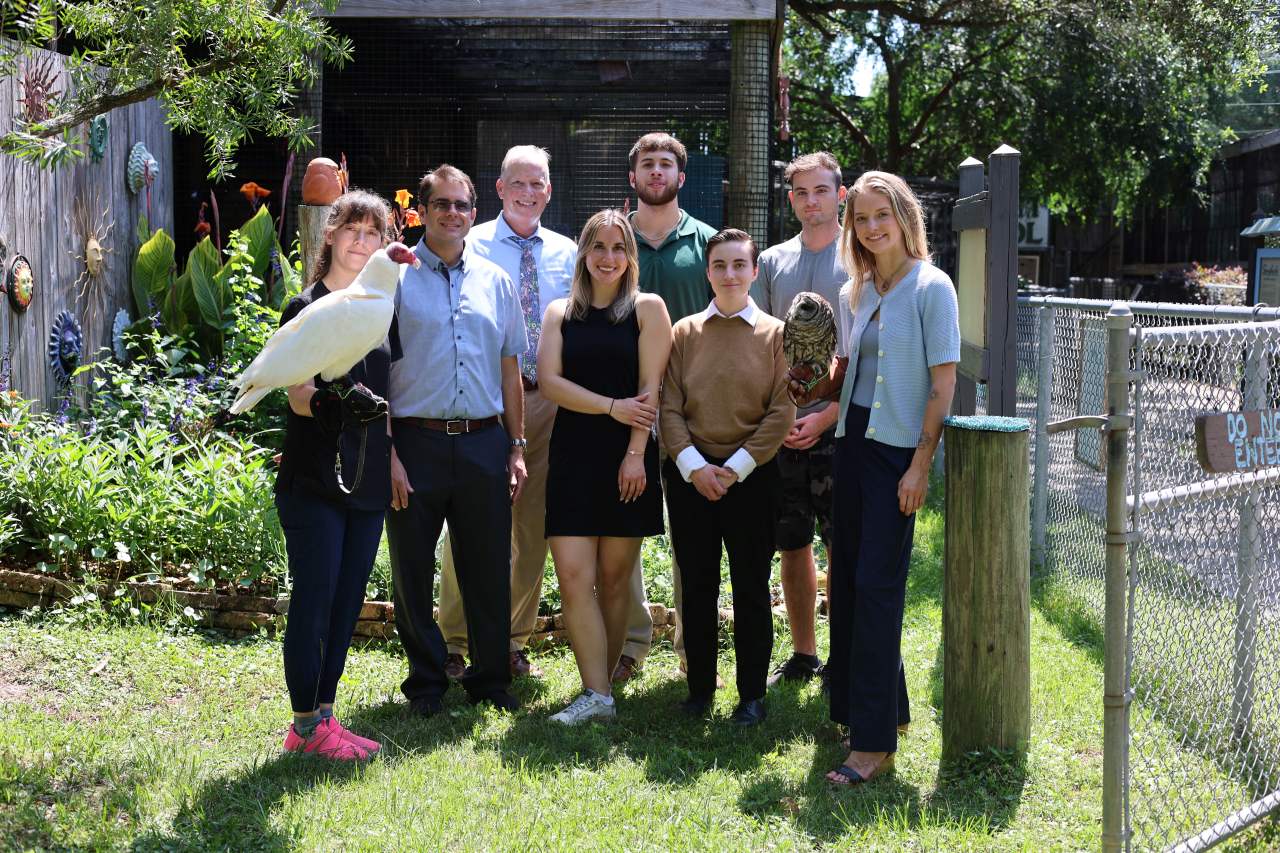
Photo caption: Lewis Bear Jr. College of Business students in a marketing class taught by Dr. James Mead conducted statistical data analysis for the Wildlife Sanctuary of Northwest Florida. They examined the possibilities of an effective $5 million capital campaign by surveying current and prospective donors. The Wildlife Sanctuary has since embarked on the campaign and applied for a $5 million grant to move to a new facility. Their current facility is in a flood zone.
I was once involved with a start-up publication in Birmingham, Alabama, which targeted C-level executives. I wanted to conduct a reader survey but was unsure how best to go about it. I contacted the business school where I worked to ask whether graduate-level marketing students could conduct the survey as part of their marketing education.
The Marketing Department was happy to oblige. The dean of the business school was kind enough to write a cover letter explaining that this was part of the students' real-world application, and encouraged our readers to complete the survey. It worked beautifully. We received an overwhelming response, and the student provided a top-notch assessment.
Four years ago, my wife, Linda, and I launched a new weekly online newsletter called Scenic 98 Coastal. The idea was to tell stories about the people, places, and things along the Gulf Coast, primarily focusing on the area between Pensacola, Florida, and Mobile, Alabama, that make this area so special.
The idea has always been to raise awareness for all the wonderful small businesses, the nonprofits, and conservation organizations that protect and preserve this amazing place we call home. The rest is just fun stuff: live entertainment, restaurants and the people behind them, art, festivals, events, day trips, and a few good stories thrown in.
After four years, we get lots of calls from readers asking for recommendations about where to go, what to do, and places to visit. We decided to take the next step by developing a Recommendables page featuring our suggestions. To make the list, it has to be something we would recommend to our friends and subscribers. The goal is to create the best experience for living the Scenic 98 Coastal lifestyle. It's about engagement, exploration, and discovery, much like what happens on a college campus.
I reached out to Scott Keller, Dean of the Lewis Bear, Jr. College of Business at the University of West Florida, to see if we could meet to discuss our plan. Over the course of our conversation, we learned a lot about each other. We determined there was a strong opportunity to engage students and faculty, beginning with hiring a student intern for the Fall semester to help build the Recommendables program.
Our engagement was critical to better understanding which opportunities fit with the business schools' strengths and would benefit us both. Having watched this occur many times over on college campuses, I felt positive we would find common ground from which to develop a partnership. It all began with engagement.
In our Scenic 98 Coastal newsletter, we make a point of staying away from politics and religion and always being positive. We exist to raise awareness of the people, places, and things that make our communities better. Our content is organic, written by real local folks. We encourage exploration and discovery. After all, we live in a wonderful playground worth engaging and exploring.
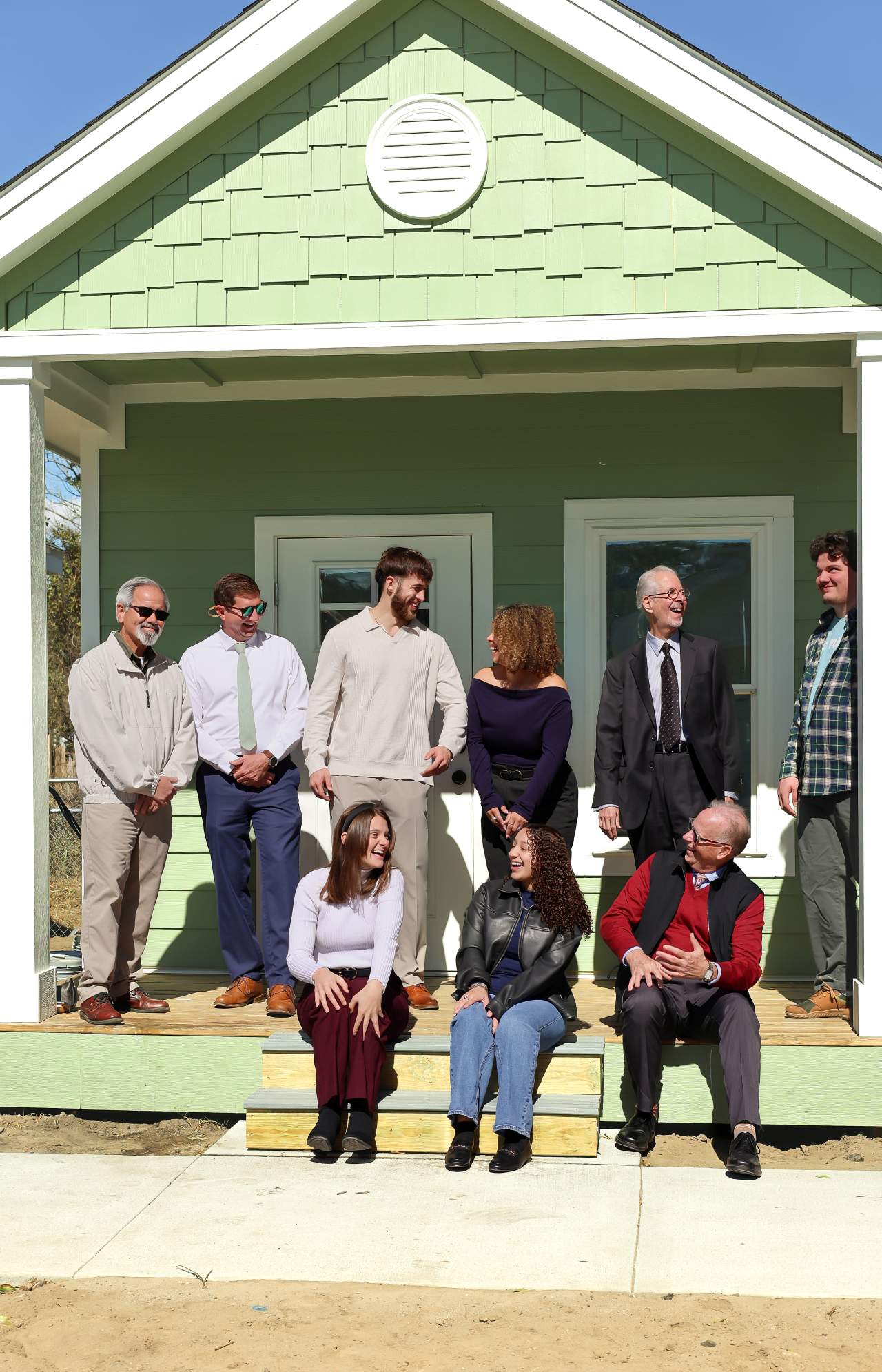
Photo caption: Lewis Bear Jr. College of Business marketing students developed brand positioning strategies for Catholic Charities of Northwest Florida. Each group of students formulated a brand idea by identifying what sets Catholic Charities apart from other nonprofits offering similar services. Student group efforts included determining how best to market Catholic Charities' 97-year history of positively impacting countless lives.
In closing, my message is to become engaged with and familiar with what is happening at your University of West Florida and at other campuses in our area. There are untold opportunities within the local business community to benefit from projects, partnerships, and collaborations. The more engagement with your community, the better. We need strong engagement, which leads to better understanding and outcomes.
I hope you will take the time to appreciate what institutions like the University of West Florida mean to communities and the livelihood they bring to students, faculty, and the alumni they represent. Get to know them. A college campus is a wonderful place to discover who you are and what you want to be. For those who live near a university, the benefits of access to lifelong learning and cultural opportunities are second to none!
More from
Community Endeavors
category